Bald eagle
Haliaeetus leucocephalus (Linnaeus, 1766) · also called American Bald Eagle, American Eagle, Bird of Washington, Washington Eagle
The bald eagle is a huge fish-eating eagle of North America, the national bird of the United States, with a white head and tail on adults and a massive yellow bill.

Quick facts
| Kingdom | Animalia[4] |
|---|---|
| Phylum | Chordata[4] |
| Class | Aves[4] |
| Order | Accipitriformes[4] |
| Family | Accipitridae[4] |
| Genus | Haliaeetus[4] |
| Species | Haliaeetus leucocephalus[1] |
| Authority | (Linnaeus, 1766)[1] |
| ITIS TSN | 175420[4] |
| Synonyms | Falco leucocephalus Linnaeus, 1766; Falco leucocephalus[2] |
| Other common names | American Bald Eagle, American Eagle, Bird of Washington, Washington Eagle[3] |
| Length | 79–94 cm (2.59–3.08 ft)[6] |
| Weight | 4.3 kg (9.48 lb)[6] |
| Lifespan (max. recorded / range) | 28 years[6] |
| Eggs per season | 1 to 3[6] |
| Incubation (time to hatching) (average) | 35 days[6] |
| Diet type | carnivore[6] |
| Habitat | Lakes, rivers, coasts, reservoirs and marshes with tall trees nearby · ADW biomes: forest forest mountains mountains[6] |
| IUCN Red List | Least Concern (LC)[5] IUCN page Population trend: not available through GBIF; see the IUCN assessment. |
Where it lives
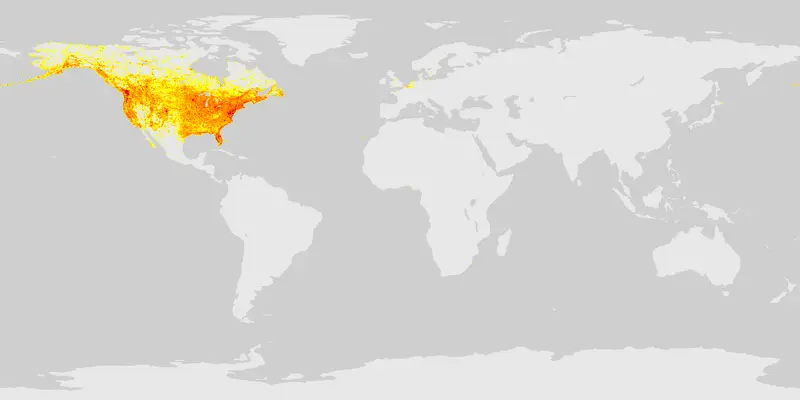
Bald eagles occur across almost all of Canada and the United States and into northern Mexico. They are most numerous in Alaska and along the Pacific Northwest coast, but they now nest in every one of the lower forty-eight states. In winter many birds move to open water, gathering in large numbers below dams, along major rivers and at coastal estuaries where fish are easy to catch. Yellowstone has resident pairs that nest near lakes and rivers. The species was nearly wiped out from much of the lower forty-eight in the mid twentieth century and has made one of the great recoveries in American conservation.
Where and when to look
Winter is eagle season for most watchers. When northern lakes freeze, bald eagles gather below dams, along big rivers and at reservoirs where open water and fish stay available, and many towns along the Mississippi, the Susquehanna, the Columbia and other rivers hold eagle-watching days in January and February. Arrive early on a cold, clear morning, when birds leave their night roosts in tall trees and fly out to fish, and bring binoculars or a spotting scope so you can stay well back. Adults with the white head and tail are obvious, but young eagles are mottled brown and white for several years and are often mistaken for golden eagles or big hawks; look for the massive head and bill and the flat, plank-like wings held level in a soar. Females are larger than males, which is clearest when a pair sits together. The voice is a surprisingly thin, high series of chirps and squeals, nothing like the scream movies use. In late winter, pairs repair huge stick nests that may be used for many years. Keep a long distance from nests and roosts, never use calls or drones to get a reaction, and stay in your car where possible, since eagles often tolerate a vehicle better than a person on foot.
When & where in the US
GBIF holds 5,930,747 occurrence records of this species from the United States. States with the most records:
- Washington 528,890
- Florida 381,411
- New York 334,282
- Ohio 324,328
- Pennsylvania 288,277
Occurrence records reflect where and when people look and report (observer effort), not just where the animal is common. Busy birding states and summer months are over-represented; zoo and museum records can appear for non-native species.
Source: GBIF occurrence search for country US.[7]
What it eats
Fish are the core of the diet, snatched from near the surface with the feet in a shallow swoop. Bald eagles also eat waterfowl, gulls, small mammals, and plenty of carrion, including dead fish and deer. They are accomplished pirates, chasing ospreys and other birds until they drop their catch. Winter gatherings at open water or salmon runs can bring many eagles together. Benjamin Franklin's famous complaint about the bird's "bad moral character" referred to this habit of stealing food.
Reproduction and life cycle
Eagles mate for a long time and return to the same territory and often the same nest year after year. Their stick nests, added to every season, can become among the largest bird nests in the world. The nest usually sits in a tall tree with a clear view, near water. Both parents incubate and feed the young. Juveniles are mottled brown and white and do not get the clean white head and tail until they are several years old, which is a source of frequent confusion with golden eagles and hawks.
Threats and conservation
The bald eagle is now listed as least concern. Its earlier collapse was driven by shooting, habitat loss and especially the pesticide DDT, which thinned eggshells so they broke during incubation. After DDT was banned and the species was protected, numbers rebounded. Today, lead poisoning from eating carcasses or gut piles that contain lead ammunition fragments is a leading cause of death, along with collisions with vehicles and power lines. The species remains protected by federal law.
How to tell it apart
- Red-tailed hawk: Much smaller, with a rusty tail on adults and a pale chest with a belly band; the hawk soars with wings in a slight V rather than the eagle's flat planks.
- Peregrine falcon: A falcon is crow-sized, with pointed wings and fast, flicking flight, and has a dark helmet instead of a white head.
- American bison: Not a look-alike, but in Yellowstone eagles often feed on winter-killed bison and elk, so check carcasses for both eagles and ravens.
Photo: (c) Justin Flint, some rights reserved (CC BY) — CC BY 4.0, source[8]. See all image credits.
Sources
- GBIF Backbone Taxonomy — Haliaeetus leucocephalus (species 2480446), via GBIF API — retrieved 2026-11-21
- GBIF — synonyms of Haliaeetus leucocephalus — retrieved 2026-11-21
- GBIF — vernacular names of Haliaeetus leucocephalus — retrieved 2026-11-21
- ITIS — full hierarchy for TSN 175420 — retrieved 2026-11-21
- IUCN Red List category via GBIF (Haliaeetus leucocephalus) — retrieved 2026-11-21
- Animal Diversity Web (University of Michigan) — Haliaeetus leucocephalus account — retrieved 2026-11-21
- GBIF occurrence search — Haliaeetus leucocephalus, country US, month and state facets — retrieved 2026-11-21
- iNaturalist taxon 5305 — Haliaeetus leucocephalus (photo source) — retrieved 2026-11-21
Written under the pen name Maya Reynolds with AI-assisted drafting, then checked against the sources cited on each page. Last reviewed 2026-11-21. Numbers in the fact table come only from the linked sources; all prose is original. See our editorial policy.