Bighorn sheep
Ovis canadensis Shaw, 1804 · also called American Bighorn, American Sheep, Argalia, Big-horn, California Bighorn (californiana), Desert Bighorn Sheep (mexicana
The bighorn sheep is a stocky wild sheep of western North American mountains and canyons, named for the massive curling horns of the rams.

Quick facts
| Kingdom | Animalia[4] |
|---|---|
| Phylum | Chordata[4] |
| Class | Mammalia[4] |
| Order | Artiodactyla[4] |
| Family | Bovidae[4] |
| Genus | Ovis[4] |
| Species | Ovis canadensis[1] |
| Authority | Shaw, 1804[1] |
| ITIS TSN | 180711[4] |
| Synonyms | Ovis catclawensis (Hibbard & Wright, 1956); Ovis cervina Desmarest, 1804; Ovis montana Cuvier, 1817; Ovis pygarus Griffith, 1827[2] |
| Other common names | American Bighorn, American Sheep, Argalia, Big-horn, California Bighorn (californiana), Desert Bighorn Sheep (mexicana[3] |
| Length | 150–180 cm (4.92–5.91 ft)[6] |
| Weight | 53–127 kg (117–280 lb)[6] |
| Lifespan (max. recorded / range) | 19 years[6] |
| Young per litter or brood | 1 to 2[6] |
| Gestation | 5 to 6 months[6] |
| Diet type | herbivore[6] |
| Habitat | Steep rocky slopes, cliffs, alpine meadows and desert canyons · ADW biomes: desert or dune desert or dune chaparral chaparral mountains mountains[6] |
| IUCN Red List | Least Concern (LC)[5] IUCN page Population trend: not available through GBIF; see the IUCN assessment. |
Where it lives
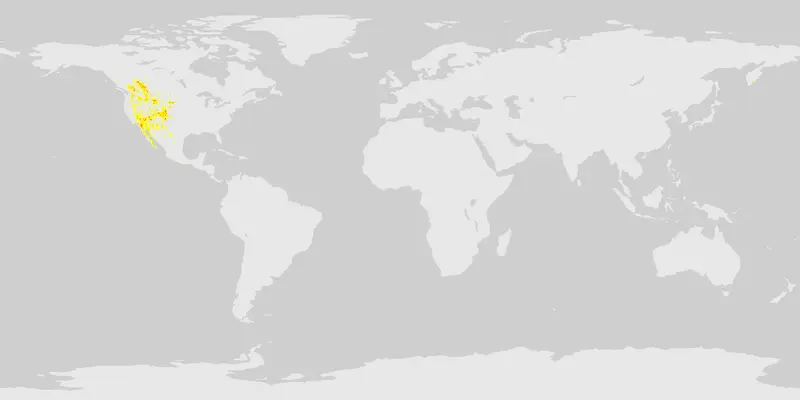
Bighorns live from the Rocky Mountains of Canada south through the intermountain West to the deserts of California, Arizona, New Mexico and northern Mexico. Desert bighorns are adapted to hot, dry ranges, while Rocky Mountain bighorns live in snowy high country, including Yellowstone's northern range near Gardiner and the cliffs along the Yellowstone River. Many herds were wiped out in the late nineteenth and twentieth centuries, and translocations by state agencies have restored sheep to many mountain ranges. Bighorns depend on escape terrain, steep cliffs where predators cannot follow, close to good grazing.
Where and when to look
Bighorn sheep live on steep, rocky slopes, canyon walls and alpine meadows across the mountain West and the desert Southwest. To find them, look up. Scan cliffs, talus slopes and grassy ledges with binoculars, especially near escape terrain where sheep can quickly scramble out of reach of predators. Their brown coats blend with the rock, so the creamy white rump patch and muzzle are often the first things you notice. Early morning and late afternoon are the best times, when bands move down to graze or visit salt licks, springs and river edges. In winter, many herds move to lower, south-facing slopes with less snow, which can bring them close to roads in some parks. Late fall is the most dramatic season. During the rut, rams test each other by rearing up and slamming their heavy, curling horns together, and the crack of the impact can echo across a canyon. Even outside the rut, you may hear clattering rocks as a band moves across a slope. Rams carry massive, spiraling horns that curl back and around the ears, and the oldest males have horns that form nearly a full circle, often chipped or broomed at the tips. Ewes have short, slender horns that curve only slightly, and they look a bit like goats from a distance. Lambs are born in late spring on steep, protected ledges, and within days they follow their mothers over terrain that looks impossible. Signs include heart-shaped split-hoof tracks, pellet piles along trails and bedding hollows scraped into the ground on ridges. Sheep are easily stressed by people, dogs and drones, and they can catch serious respiratory diseases from domestic sheep and goats. Watch from a distance, stay on established trails, keep dogs leashed or at home, and never throw rocks or try to get sheep to move for a better photo. If a band stops feeding to stare at you, back away.
When & where in the US
GBIF holds 20,971 occurrence records of this species from the United States. States with the most records:
- California 4,605
- Colorado 3,563
- Nevada 2,302
- Montana 2,040
- South Dakota 1,624
Occurrence records reflect where and when people look and report (observer effort), not just where the animal is common. Busy birding states and summer months are over-represented; zoo and museum records can appear for non-native species.
Source: GBIF occurrence search for country US.[7]
What it eats
Bighorns mainly graze grasses and sedges, adding forbs and shrubs when grasses are scarce, especially in winter. Desert sheep also eat cactus and other succulents for moisture. Like cattle they are ruminants, filling their stomachs quickly in open areas and then retreating to safer rocky ledges to chew their cud. They often visit mineral licks.
Reproduction and life cycle
The breeding season comes in late fall. Rams establish rank by rearing up and crashing horns together head-on, and the crack can carry across a canyon. Their thick skulls and a strong tendon at the back of the neck help absorb the impact. Ewes give birth to a single lamb in spring on remote cliff ledges, and lambs can climb within hours. Ewes and lambs form groups that stay apart from the ram bands for most of the year.
Threats and conservation
Bighorn sheep are listed as least concern overall, but some herds are small and vulnerable. Pneumonia spread from domestic sheep and goats is the biggest threat, sometimes killing entire herds, so keeping domestic and wild sheep apart is a major management goal. Habitat loss, fire suppression that lets forests encroach on open slopes, and disturbance also matter. The Sierra Nevada bighorn is federally endangered.
How to tell it apart
- Pronghorn: Lighter built with white throat bands and a black face mask on males; lives on flat open plains rather than cliffs.
- Elk: Much larger, with a dark shaggy neck and branching antlers on bulls, no curling horns.
- White-tailed deer: Slender and long-legged, with antlers only on bucks; deer bound away on flat ground.
Photo: (c) John Krampl, some rights reserved (CC BY) — CC BY 4.0, source[8]. See all image credits.
Sources
- GBIF Backbone Taxonomy — Ovis canadensis (species 2441119), via GBIF API — retrieved 2026-11-21
- GBIF — synonyms of Ovis canadensis — retrieved 2026-11-21
- GBIF — vernacular names of Ovis canadensis — retrieved 2026-11-21
- ITIS — full hierarchy for TSN 180711 — retrieved 2026-11-21
- IUCN Red List category via GBIF (Ovis canadensis) — retrieved 2026-11-21
- Animal Diversity Web (University of Michigan) — Ovis canadensis account — retrieved 2026-11-21
- GBIF occurrence search — Ovis canadensis, country US, month and state facets — retrieved 2026-11-21
- iNaturalist taxon 42391 — Ovis canadensis (photo source) — retrieved 2026-11-21
Written under the pen name Maya Reynolds with AI-assisted drafting, then checked against the sources cited on each page. Last reviewed 2026-11-21. Numbers in the fact table come only from the linked sources; all prose is original. See our editorial policy.