Mallard
Anas platyrhynchos Linnaeus, 1758 · also called Common Mallard, Domestic Duck, Mallard Duck, Mallard/American Black Duck, Mallard/Mottled Duck, Northern Mallard
The mallard is a duck found across much of the world, the male with a shiny green head and neck and curled black tail feathers, the female in plain brown, and both with a blue patch on the wing.

Quick facts
| Kingdom | Animalia[4] |
|---|---|
| Phylum | Chordata[4] |
| Class | Aves[4] |
| Order | Anseriformes[4] |
| Family | Anatidae[4] |
| Genus | Anas[4] |
| Species | Anas platyrhynchos[1] |
| Authority | Linnaeus, 1758[1] |
| ITIS TSN | 175063[4] |
| Synonyms | Anas boschas Linnaeus, 1758; Anas oustaleti Salvadori, 1894; Anas oustaleti[2] |
| Other common names | Common Mallard, Domestic Duck, Mallard Duck, Mallard/American Black Duck, Mallard/Mottled Duck, Northern Mallard[3] |
| Weight | 1082 g (2.39 lb)[6] |
| Lifespan (max. recorded / range) | 26.3 years[6] |
| Eggs per season | 9 to 13[6] |
| Incubation (time to hatching) | 26 to 28 days[6] |
| Length | Not available from our sources |
| Habitat | Wetlands, ponds, lakes, rivers and coastal waters · ADW biomes: taiga taiga savanna or grassland savanna or grassland forest forest rainforest rainforest scrub forest scrub forest[6] |
| IUCN Red List | Least Concern (LC)[5] IUCN page Population trend: not available through GBIF; see the IUCN assessment. |
Where it lives
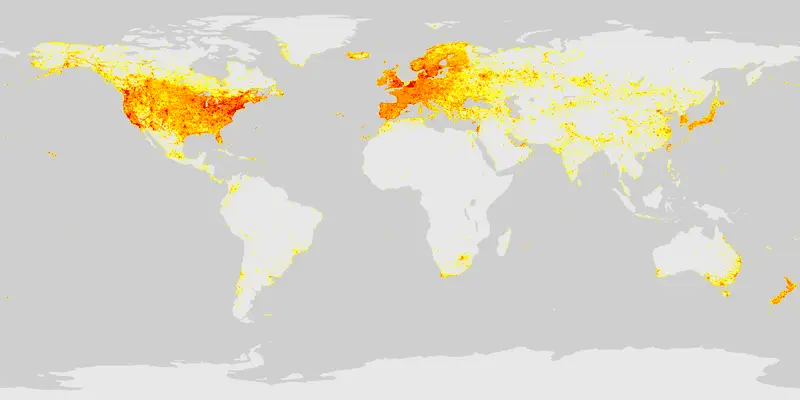
Mallards live almost everywhere on Earth. They are most dominant in the Northern Hemisphere, and they are also easy to find in Oceania, Asia, Africa, South America and on many islands. ADW counts native populations in every major region it uses, from North America and Eurasia to Australia and the oceanic islands. The habitat list is just as broad, taking in lakes and ponds, rivers and streams and coastal waters, set in landscapes that range from northern taiga and grassland to forest, scrub and rainforest. Their favorite places are wetlands. Rich, productive water grows plenty of plants, whether floating, rooted and poking above the surface or fully underwater, and it also teems with the small invertebrates that mallards eat. Many mallards are migrants. Once breeding is over, they gather in flocks and fly from northern areas to warmer southern ones, where they feed and wait for the next nesting season. Others stay through the winter wherever food and shelter are plentiful, forming resident populations. In GBIF records from the United States, the most sightings come from California, New York, Washington, Colorado and Wisconsin. Reports climb through spring, peak in April and May and drop to their lowest point in July. When and where to look: any wetland, park pond, lake or slow river. Spring, when sightings are most frequent, is a fine time to start, and a pond where people already gather is often the easiest place of all.
When & where in the US
GBIF holds 18,947,373 occurrence records of this species from the United States. States with the most records:
- California 1,995,956
- New York 1,321,340
- Washington 924,147
- Colorado 910,567
- Wisconsin 881,441
Occurrence records reflect where and when people look and report (observer effort), not just where the animal is common. Busy birding states and summer months are over-represented; zoo and museum records can appear for non-native species.
Source: GBIF occurrence search for country US.[8]
What it eats
Mallards eat a wide mix of foods. Plants are a major part, along with insects, worms, snails and other gastropods, and arthropods of many kinds, and the list is not limited to these. Productive wetlands suit them because they supply both the vegetation and the swarms of water invertebrates the ducks rely on. Mallards are also quick to use food that people provide, and they glean leftover grain from crop fields after harvest time. Their genus, Anas, is the group known as the dabbling ducks and teals, and it sits within the family Anatidae alongside the other ducks, geese and swans. Integrated taxonomic records credit the scientific name to Linnaeus in the eighteenth century, and they list an old name, Anas oustaleti, as a synonym. A typical adult mallard weighs a little over two pounds, so it needs a steady supply of food from its wetland home.
Reproduction and life cycle
Mallards start pairing early in the cold season. Pair bonds may form as early as October and keep forming through March, so many birds are already paired long before nesting begins. Most females, called hens, breed for the first time when they are about a year old, and males also mature at around that age. Young hens often struggle, though; studies have found that ducklings of older hens die at much lower rates than those of first-year mothers. The drake does not stay to help. Soon after mating he leaves the hen, and she handles the rest on her own. She usually lays nine to thirteen eggs in a nest on the ground close to water. After about four weeks of incubation the ducklings hatch, and the hen leads them to the water. Once the family leaves, she does not go back to the nest. The female keeps in touch with her voice. The loud quack that people know as the typical duck sound comes from female mallards. It is called the decrescendo call, and it carries for miles. A hen uses it to draw other ducks to her, including her own ducklings, which is why it is also known as the hail call. A longevity figure from the Bird Banding Laboratory cited by ADW is more than twenty-six years.
Threats and conservation
Mallards are the most plentiful and widespread waterfowl on the planet, and the IUCN lists them as Least Concern. Hunters take millions every year, yet the harvest has little effect on their numbers. The biggest danger is the loss of habitat, though the species adjusts readily to human disturbance. In the United States mallards are protected under the federal migratory bird law, and hunting is regulated. They are an important game species. License fees paid by hunters help fund mallard management and protect key habitat, and spending on hunting gear adds a significant amount to the economy. Nesting on the ground carries risks. The ADW account for the American crow notes that crows raid nests and may reduce game birds such as ducks. Because the ducks depend on productive wetlands, protecting marshes and ponds is the most direct way to help them.
How to tell it apart
- Canada goose: Shares the same ponds, but a goose is much larger, with a long black neck, a white chin mark and a brown-gray back. A drake mallard has an iridescent green head and neck instead, and a hen is plain brown.
- Wild turkey: A hen mallard on a field edge is small and brown, while a turkey is far bigger, with long legs, a long neck and a broad fan-shaped tail. Mallards show a blue wing patch that turkeys lack.
- House sparrow: Both are brown birds of town parks, but a sparrow is a tiny songbird with a thick seed-cracking bill and a streaked back, hopping on the ground. A brown hen mallard is many times heavier and spends its time on or near water.
- American crow: A crow is glossy black all over with a black bill. A drake mallard has a shiny green head, curled black tail feathers and a blue wing patch, and a hen is brown with the same blue patch.
Photo: (c) hedera.baltica, some rights reserved (CC BY-SA) — CC BY-SA 4.0, source[9]. See all image credits.
Sources
- GBIF Backbone Taxonomy — Anas platyrhynchos (species 9761484), via GBIF API — retrieved 2026-11-21
- GBIF — synonyms of Anas platyrhynchos — retrieved 2026-11-21
- GBIF — vernacular names of Anas platyrhynchos — retrieved 2026-11-21
- ITIS — full hierarchy for TSN 175063 — retrieved 2026-11-21
- IUCN Red List category via GBIF (Anas platyrhynchos) — retrieved 2026-11-21
- Animal Diversity Web (University of Michigan) — Anas platyrhynchos account — retrieved 2026-11-21
- GBIF occurrence density map tile for Anas platyrhynchos — retrieved 2026-11-21
- GBIF occurrence search — Anas platyrhynchos, country US, month and state facets — retrieved 2026-11-21
- iNaturalist taxon 6930 — Anas platyrhynchos (photo source) — retrieved 2026-11-21

Written under the pen name Maya Reynolds with AI-assisted drafting, then checked against the sources cited on each page. Last reviewed 2026-11-21. Numbers in the fact table come only from the linked sources; all prose is original. See our editorial policy.